HELF and TVs – It’s Not Black and White
Higher Everyday Living Fee (HELF) programs have now been live for several months, and we are seeing a high level of acceptance with new residents.
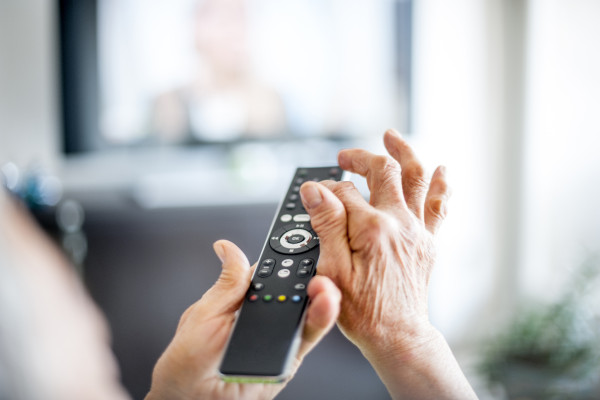
Televisions have been a hot topic well before 1 November and have continued to be a focal point for debate, stimulating many conversations around what should be standard and what is a HELF service.
The discussion, however, is not really about TVs. It is about how providers interpret funding boundaries, design HELF packages, and balance community expectations with commercial sustainability.
Funding Boundaries: What is included
It really isn’t black and white. We recognise that frontline staff are often the ones having these conversations and may feel uncomfortable explaining that TVs are an optional service. Clear and consistent messaging is therefore essential.
It is important to clarify that TVs are not funded within the RCSL, the accommodation fee (or RAD), or any other government funding source.
TVs are:
☒ Not included in the basic daily fee
☒ Not part of the accommodation fee
☒ Not an IHACPA room pricing consideration
☒ Not government funded
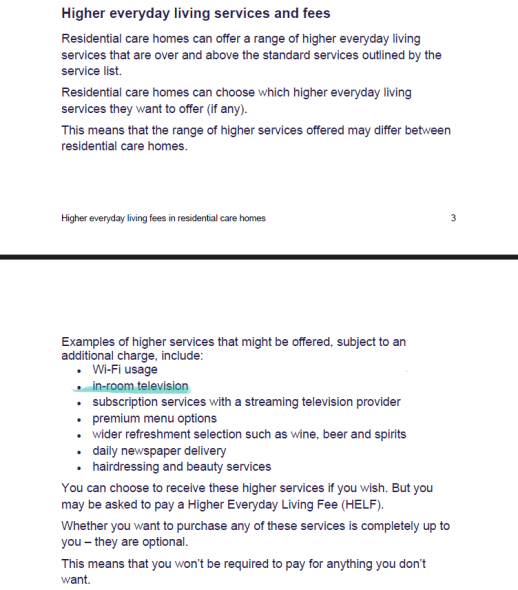
Personal TVs have never been a provider’s responsibility. In the past, residents were advised to bring in their own portable TV, which typically sat on the overbed table. With the advent of wall-mounted flat screen TVs, providers did not want families drilling into walls, so many homes started providing TVs.
Despite this being a relatively new trend, many homes now see this as a minimum expectation and advising new residents that a fee applies if they want this service has prompted debate in homes that have not been charged for services in the past.
The good news is that homes are advising us that new residents have been happy to pay for the TV and other services.
Questions and concerns have most often arisen during implementation conversations, which reinforces the importance of equipping frontline teams with clear rationale and consistent language.
It is important to remember that if you find yourself in a public hospital, you will likely be asked to pay for the free-to-air TV in your room.
HELF and TVs are a practical test case in choice, revenue and resident experience under the reform legislation
HELF and the Principle of Choice
Resident consumer groups were adamant that providers move away from mandatory Additional Services packages and towards genuine resident choice. Under the former model, residents paid for bundled services regardless of whether they valued or used them. TVs were commonly included in these fees.
Moving away from the mandatory fee of Additional Services is a move that enhances resident choice around both the services they would like and what they wish to spend their money on. This opportunity to choose to purchase (or not) is person-centred care in practice.
What about pre-HELF residents?
TVs as an optional service aligns with person-centred care and choice, for new residents who have the benefit of receiving the information prior to entering the home. However, removing or reclassifying the TV for existing residents who have had the benefit of the TV at no charge risks undermining trust and a sense of fairness.
What early sector metrics are showing
Across our client base, early HELF uptake data indicate a consistent trend: where high-demand services such as televisions are embedded within a well-designed HELF package, overall package uptake is stronger, and for those who don’t purchase a package, residents are purchasing TVs individually as a service.
When thoughtfully designed within a HELF program, TVs:
✓ Support higher overall HELF revenue
✓ Increase perceived value of the package
✓ Simplify operational delivery for frontline teams
✓ Reduce transactional conversations about individual line items
Need Help with HELF?
Our HELF transition and implementation services are designed to streamline your journey, ensure compliance, and position your organisation for success under the new regulations.
Join Our Upcoming Webinar
We’re hosting a webinar with Inside Ageing on Thursday, 12 March:
The First 100 Days of Higher Everyday Living Fees

James Saunders and Megan White will discuss:
- The common reasons providers delay HELF decisions — and the practical implications of waiting.
- Resident and family initial responses to HELF (uptake).
- Operational lessons from the first 100 days, including common implementation challenges.
- The role of appropriate accommodation pricing.
- Practical recommendations and provider-led solutions to support effective and sustainable HELF models.
Learn more and register here.
To find out how we can assist your organisation with Higher Everyday Living Fees, contact Megan.
Megan White
02 9068 0777
megan.white@prideagedliving.com.au