
The Opal HELF Story - Who Should Pay for TVs?
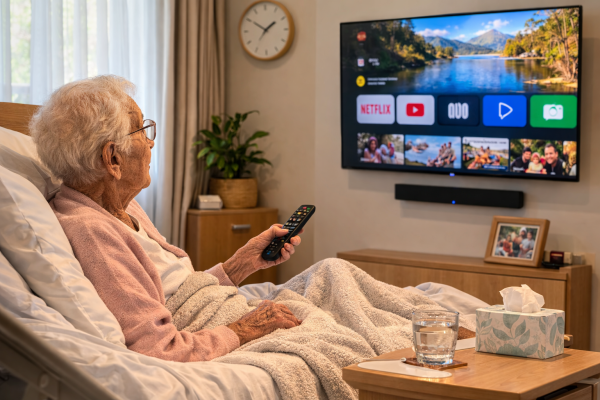
The recent Opal HELF coverage has reignited debate about TVs in aged care. The real issue is not whether TVs should be provided, but who should fund non-care services in a system designed to fund care.
What has happened
You've probably seen the media stories regarding Opal’s Higher Everyday Living program. It is disappointing the Minister described the inclusion of TVs as ‘disgusting’, labelling access to TVs as a ‘basic human right’, despite multiple examples of TVs as a HELF service in the Department’s own HELF Guidelines.
What the policy actually says
That said, this issue was widely debated when the guidelines were published, and everyone had to get their head around the fact the government was focussed on funding care and not accommodation and hotelling services. We released an insight article, HELF and TVs – It’s not Black and White, and discussed this during a recent webinar with Inside Ageing prior to the Opal story.
Providers have never been required to provide TVs. In the past, residents brought in portable TVs from home. With the advent of large, flat screen TVs, this is no longer possible, as these need to be wall mounted for the safety of residents and staff.
What happens if TVs are mandated
If the Department were to mandate the provision of TVs, this would require a rewrite of the Residential Care Services List (RCSL) and pricing by IHACPA. Let’s say at a modest $1,000 per TV inclusive of installation, this would cost the government approximately $200 million. Would this pass the pub test as a good use of taxpayer funds during a cost-of-living crisis?
The funding pressure already in the system
In light of the Opal story, some providers are worried about community backlash and are considering providing TVs at no cost. Whilst understandable, providers need to consider whether this is viable. There is currently an enquiry into the supported supplement, which is so low that providers have to increase accommodation charges on RAD-paying residents to get them to subsidise their supported residents.
A practical approach for providers
Whilst it remains unclear whether the Department will revise the guidelines, we suggest providers take a practical approach to the inclusion of TVs in a HELF program.
We understand that with the advent of HELF, a number of providers are investing in larger, smart TVs for residents.
Providers should continue to offer TVs as a HELF service and allow residents the option to provide their own TV and pay for professional installation, testing and tagging.
Ultimately, the purpose of HELF is to provide residents with more choice and access to services they would have had in the community, within a sustainable model.
Answer our poll below:
If you have any comments in regard to the matter, we’d be interested in hearing them.
To find out how we can assist your organisation with Higher Everyday Living Fees, contact James.
James Saunders
02 9068 0777
james.saunders@prideagedliving.com.au